Workforce Planning, Retention, and Management Decision Design
This section addresses the workforce-related human factors supporting the proposed First Solar business model. The analysis focuses on how the organization can hire qualified personnel, retain high-value employees, and strengthen management decision quality as operations scale.
The proposed human resource strategy supports the broader objectives established in the earlier sections of this project. As customer growth, production reliability, quality control, and distribution performance improve, workforce capability becomes a critical requirement for long-term execution. For that reason, employee planning must be treated as an operational and strategic priority rather than as a secondary administrative function.
How the Organization Can Attract and Keep High-Value Employees
The proposed model requires a workforce capable of supporting supply chain coordination, manufacturing continuity, quality assurance, customer support, account responsiveness, and strategic management. Because these functions directly affect delivery performance and customer confidence, staffing quality becomes a measurable component of business performance.
Hiring should therefore prioritize role fit, technical capability, communication strength, and adaptability to standardized workflows. Retention should focus on structured training, role clarity, advancement opportunity, performance feedback, and manager responsiveness. In a process-driven organization, employee retention is especially important because workforce instability can weaken coordination, reduce process consistency, and increase operational risk.
Workforce Roles Supporting the Proposed Model
A scalable solar manufacturing and fulfillment strategy depends on coordinated performance across multiple workforce groups. These include procurement personnel, production planners, manufacturing staff, quality assurance specialists, logistics coordinators, account support staff, and line management. Each group contributes to a different part of the value chain, but all must operate within a unified process structure.
This requirement supports a hiring model in which technical skill alone is not sufficient. Employees must also be capable of working within standardized escalation paths, performance dashboards, validation checkpoints, and continuous-improvement loops. As a result, the human resource model must support both technical competence and process discipline.
Figure 16. Workforce and Management Flow Using the OODA Model
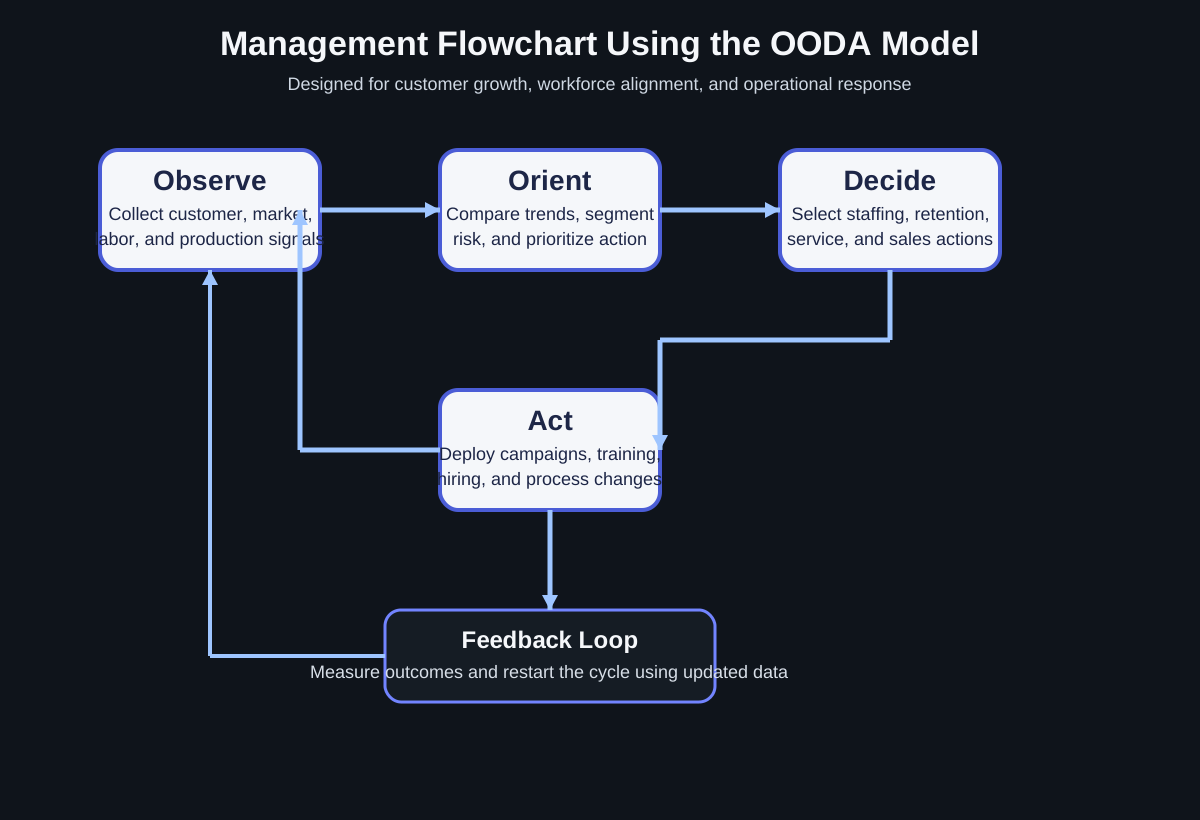
The OODA model illustrates how management can respond to changing operational conditions through a structured cycle of observation, orientation, decision, and action. This model is useful in an environment where labor conditions, customer expectations, production demands, and market changes require timely and informed response.
In the Observe stage, management gathers signals related to customer behavior, employee performance, production output, quality results, and workforce capacity. In the Orient stage, these signals are interpreted to identify patterns, risks, and priorities. In the Decide stage, management selects a response, such as expanding hiring, adjusting training, reallocating resources, or intervening in a performance issue. In the Act stage, the selected response is implemented and then measured so the cycle can begin again with improved information.
The design logic of this model is based on the need for recurring management adaptation. A static management model is less effective in a growth environment because customer demand, staffing needs, and operational pressure are likely to change over time. The OODA structure supports rapid learning, quicker management response, and stronger alignment between workforce planning and operational strategy.
Figure 17. Recognition-Primed Decision Design
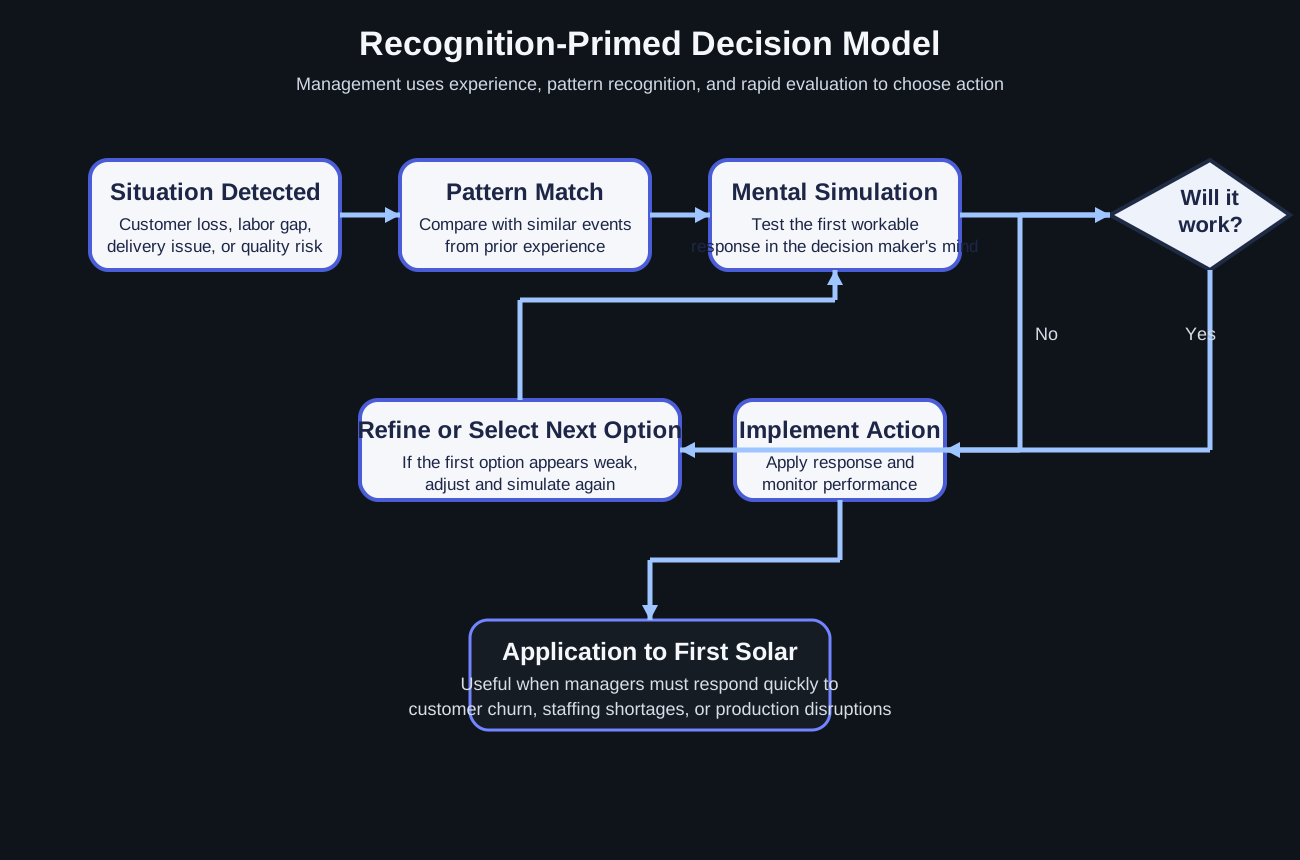
The Recognition-Primed Decision Model demonstrates how experienced managers can make effective decisions in time-sensitive situations by identifying familiar patterns, mentally simulating potential responses, and selecting the first workable option that appears likely to succeed.
This model is especially relevant in situations involving labor shortages, delivery disruption, customer escalation, process breakdown, or quality variance. In these circumstances, management may not have the time or conditions necessary to compare many alternatives through a long formal analysis. Instead, experienced leaders often rely on pattern recognition, prior exposure, and rapid mental simulation to identify an appropriate response.
The design logic of this model is based on practical managerial behavior. In real operating environments, many decisions are made under time pressure and with incomplete information. The Recognition-Primed approach is therefore useful because it reflects how managers actually behave when selecting responses to operational and workforce challenges. It complements the OODA model by strengthening the quality of the decision-making stage.
How the Human Resource Model Supports Employee Retention
Retention improves when employees understand expectations, receive timely support, and believe that the organization has a stable direction. The proposed model supports retention by establishing clearer workflows, better feedback channels, stronger management oversight, and more consistent decision support.
Workforce retention also improves when managers respond effectively to workload imbalance, process friction, and unresolved operational barriers. The OODA and Recognition-Primed models both support this requirement because they help management recognize issues earlier and act more decisively. Over time, these behaviors reduce preventable frustration, improve employee confidence, and support a more stable workforce.
How Human Resource Planning Supports the Broader Business Model
The earlier sections of this project demonstrated that stronger operations, better pricing discipline, improved quality control, and stronger customer retention can support growth. This section extends that logic by showing that those gains cannot be sustained without a capable and stable workforce.
In practical terms, the proposed human resource strategy supports every major business objective in the redesigned model. Hiring supports execution capacity. Training supports process consistency. Retention protects organizational knowledge. Stronger management decision models improve responsiveness. Together, these factors create a workforce structure that can support long-term operational and financial performance.
| Human Resource Factor | Operational Benefit | Business Outcome |
|---|---|---|
| Targeted hiring | Improves role readiness and capability fit | Supports more reliable execution |
| Structured training | Reduces process inconsistency and error | Improves quality and throughput |
| Employee retention | Preserves workforce knowledge and stability | Reduces disruption and replacement cost |
| OODA management cycle | Improves recurring decision adaptation | Strengthens organizational responsiveness |
| Recognition-Primed decisions | Supports faster management action in live conditions | Improves operational resilience |
| Integrated HR strategy | Aligns people, process, and management behavior | Supports sustained long-term growth |
Human Resource Recommendation for First Solar
Based on the projected workforce analysis, the organization should adopt a human resource strategy centered on targeted hiring, structured employee development, management responsiveness, and decision discipline. This approach is better aligned with a scaling operational model than a reactive staffing process.
Management should treat workforce capability as a strategic performance driver rather than a background support function. A stable and well-managed workforce improves the likelihood that the proposed operational, customer, and financial gains identified throughout this project can be achieved and sustained.